
第81回国連総会第5委員会主要会期における議題138「2027年国連計画予算案」及び議題139「2027年計画策定」に関する山﨑大使のステートメント
令和8年10月13日
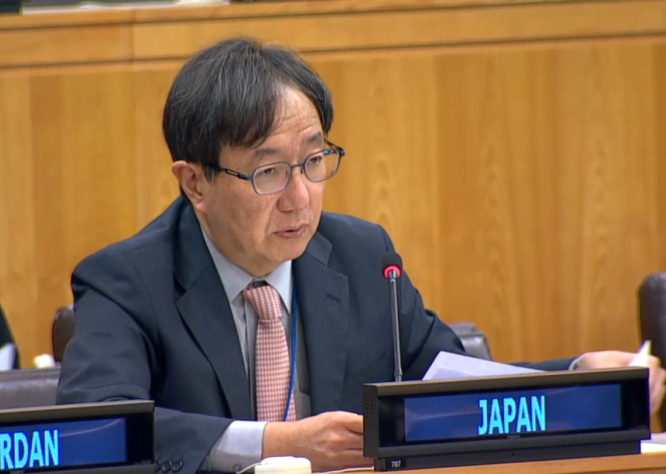
Statement by H.E. Ambassador YAMAZAKI Kazuyuki
Permanent Representative of Japan to the United Nations
Agenda Item 138: Proposed Programme Budget for 2027
and Agenda Item 139: Proposed Programme Plan for 2027
Main Part of the 81st Session of the Fifth Committee
of the United Nations General Assembly
Mr. Chair,
Let me begin by thanking the Secretary-General and his team for having worked hard to advance the UN80 over the past year. As we are seeing tangible results, this is the time to make sure that the reform endures.
We should not find ourselves ten years from now repeating the same discussion again. Through this session, we should send a clear signal that the reform under way is not a one-off exercise, but a part of a continuous effort to build the sustainable United Nations. Let me highlight some principles we attach high importance to when discussing the proposed programme planning and budget for 2027.
Mr. Chair,
For the UN to deliver effectively across the three pillars, it needs strong foundations. That means upholding the rule of law, protecting the safety and security of the UN personnel serving in difficult environments, and building the UN that is effective, efficient and financially sustainable over the long term.
The reform should not be just a fiscal or structural exercise but an opportunity to reflect the values the UN represents. That includes building a balanced and sustainable workforce. The important work remains on workforce rejuvenation and on improving geographical diversity, particularly by reducing the gap between the desirable range and actual staff numbers for under-represented countries.
Mr. Chair,
On the RC System, predictable and sustainable financing is important. At the same time, what matters most is how to ensure that the system facilitates the UN to deliver as effectively and efficiently as possible on the ground. Country contexts, capacities, needs, and the impact of coordination differ. We therefore believe that the system should take into account these differences and priorities identified in light of them.
Mr. Chair,
Across all of these discussions, financial sustainability remains a key. Priorities evolve over time and some area may require additional resources. But that comes with difficult choices within limited resources. Our responsibility is to look at the budget as a whole, set clear priorities, and make adjustment where necessary to keep the overall resources at a reasonable and sustainable level.
We will contribute to these discussions constructively to make the UN that is not only more sustainable today, but better equipped for a long term.
Thank you.