
平和構築委員会(PBC)報告書、平和構築と平和の持続及び平和構築基金(PBF)事務総長報告書に関する国連総会合同討論における山﨑大使ステートメント
令和8年6月25日
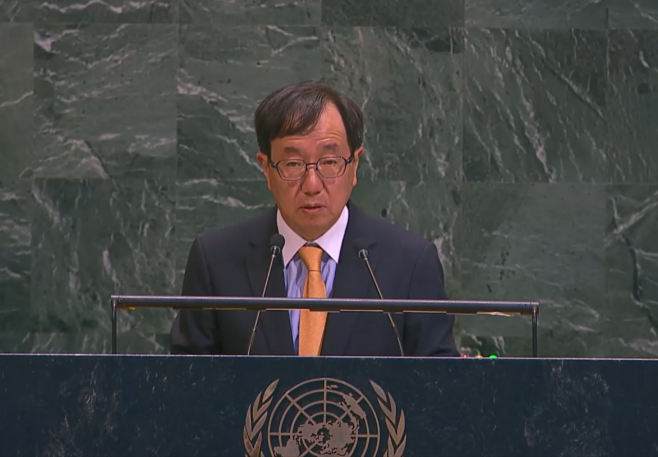
Madam President,
Excellencies,
Distinguished delegates,
In the past decade, the concept of peacebuilding has developed into a key integrating concept for the UN. While it has increasingly been recognized as a component of the peace and security pillar, it has also evolved into an overarching perspective connecting all three pillars. As we mark the 20th anniversary of the Peacebuilding Architecture, its role in preventing conflict and sustaining peace is more important than ever.
Today, addressing the increasing number of conflicts and their multifaceted root causes requires comprehensive and coherent approaches that take into account the perspective of human security. In this regard, we hope the Peacebuilding Architecture continues to play a pivotal role in ensuring that such an approach guides and integrates the efforts of the UN system toward sustaining peace.
Building on the discussions and progress made over the past year, allow me to highlight three points.
First, it is essential to advance the implementation of the PBAR resolutions. At a time of increased fiscal constraints, Member States have rightly called for greater effectiveness and efficiency in delivering peacebuilding outcomes. This was precisely why last year’s PBAR focused on the question of “how”. The PBAR resolutions should serve as a concrete roadmap for enhancing impact. Their provisions must not remain merely aspirational. An important first step would be to identify practical action points where the commitments contained in the resolutions can be translated into tangible results on the ground.
Second, we must continue to strengthen support for conflict prevention based on national ownership. Preventing conflict not only saves lives and protects hard-won development gains, but it is more cost-effective than responding after violence has erupted. We therefore welcome the growing number of countries presenting National Prevention Strategies in PBC meetings. This trend reflects the increasing recognition and demand among Member States for prevention efforts.
The PBC can be a valuable platform for countries presenting National Prevention Strategies by helping to mobilize coherent and coordinated support from actors across and beyond the UN system. Such presentations would demonstrate national commitment and help clarify desired outcomes and priority actions, making it easier to monitor progress and identify areas where additional support may be needed. We encourage further utilization of the PBC in this manner and the PBC to strengthen follow-up on the implementation of these strategies.
Third, it is critical for the PBF to maximize its role in building partnerships within and beyond the UN system. Its impact is greatest when it fosters broader partnerships so as to reduce the risk of relapse into conflict, sustain peace, and advance development. This should start within the UN system itself. In the transition from peacekeeping to peacebuilding, partnerships across the UN system are indispensable to avoid a “financial cliff” and preserve peacebuilding gains achieved during mission deployments. Building on this internal coherence, peacebuilding support must gradually shift to scalable and sustainable development efforts based on long-term partnerships with IFIs and the private sector to further consolidate peace.
Moving forward, it will be important to take stock of these catalytic approaches and partnership-building efforts that have proven most effective. From this perspective, the annual strategic dialogue between the PBC and the PBF, held for the first time last year, is an essential initiative that should be continued. We would also encourage more frequent briefings by PBF recipient countries to the PBC on how PBF support has contributed to peacebuilding outcomes. Such exchanges would provide valuable lessons for all stakeholders.
To conclude, I reaffirm Japan’s steadfast commitment to working with all partners to advance our shared objective of sustaining peace and building more resilient and inclusive societies.
Thank you.