
スーダンにおける教育保護に関する安保理アリア・フォーミュラ会合における梅津大使ステートメント
令和8年8月7日
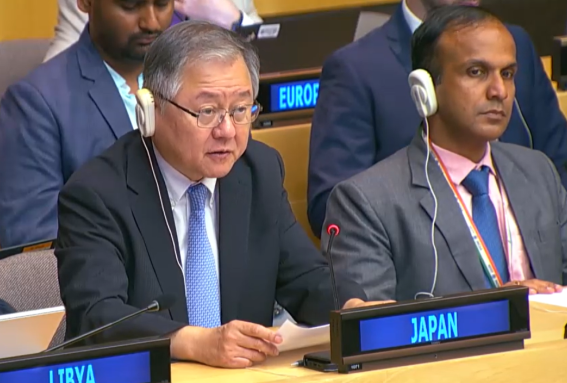
(as delivered)
I thank you, Mr. Chair,
I thank Somalia, Democratic Republic of Congo, and Liberia for bringing attention to this important issue, and the briefers for their insights.
After more than three years of conflict, the humanitarian crisis in Sudan remains among the largest in the world. The reported targeted attacks on multiple locations in El-Obeid, including educational institutions, are gravely concerning. These attacks further exacerbate an already severe humanitarian crisis, in which nearly 34 million people, a staggering 65% of the population, are in dire need of humanitarian support, with more than 7,000 schools located in active conflict areas.
Mr. Chair,
The impact of the conflict on education is particularly grave. Millions of children in Sudan continue to face severe disruptions to their education. As the conflict persists, this learning loss threatens both the human security of individual students and Sudan’s long-term recovery and resilience.
Access to education is a fundamental human right and a powerful tool to prevent and mitigate conflict. It also contributes to protection against grave violations such as child recruitment and often provides access to other essential services, including health care and safe water.
We therefore call upon all Member States to uphold and implement Security Council Resolution 2601, maintain international attention on the protection of education in Sudan and take concrete measures to address the country’s escalating education crisis.
Turning this commitment into action, Japan is supporting a 5 million USD project to restore learning opportunities for more than 83,600 conflict-affected children across five states in Sudan. Through Education Cannot Wait, Japan is also supporting Sudanese refugee children and their host communities in neighboring countries.
Lastly, to prevent further deterioration of Sudan’s humanitarian situation and educational crisis, we call for an immediate and unconditional ceasefire and urge all parties to uphold their obligations under international law, including by facilitating rapid and unimpeded humanitarian access, and protecting civilians and civilian infrastructure, including schools from attack.
Japan will continue striving to protect children and education facilities affected by armed conflict through a holistic, human security approach.
I thank you.