
Explanation of Position (EOP) by H.E. Ambassador YAMAZAKI Kazuyuki, Permanent Representative of Japan to the United Nations, at the General Assembly Plenary Meeting on the resolution regarding the Review of Peacebuilding Architecture (agenda item 62 "Peacebuilding and sustaining peace")
2025/11/26
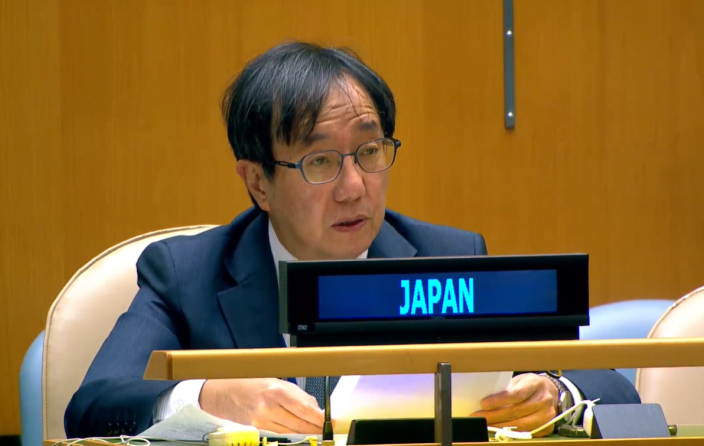
(As delivered)
Thank you, Mr. President.
Japan welcomes the twin resolutions adopted today on the review of the United Nations peacebuilding architecture. We thank the co-facilitators, Ambassador Osama Mahmoud of Egypt who will depart soon and to whom we express heartfelt farewell and profound gratitude on his departure as Permanent Representative of Egypt, as well as Ambassador Samuel Zbogar of Slovenia, and their respective teams for their tireless efforts and commitment towards this successful outcome. Japan, on our part as the current Vice-Chair of the PBC as well as a PBC member since its founding, has placed the utmost importance on the PBAR and actively participated in the negotiations.
Mr. President,
Since the introduction of the concept of “sustaining peace” in the 2016 PBAR, it has become clear that peacebuilding is not limited to the post-conflict stage but rather requires continuous efforts across all phases of conflict. The fact that many countries bring their own national conflict-prevention strategies to the PBC demonstrates that prevention is widely regarded as a matter of the great significance. Japan believes that the strength of the PBC lies in its ability to engage in all stages of conflict while convening all relevant actors within and outside the United Nations, demonstrating its comprehensiveness.
While steady progress has been made, conflicts persist around the world and some have worsened. While military expenditures are rising in many countries, resources allocated to peacebuilding remain limited. As a result, people in conflict-affected countries continue to face significant challenges with insufficient support. In light of this reality, it was both crucial and appropriate that this review focuses on the tangible impact on the ground, and on what the components of the PBA—the PBC, PBF, and PBSO—can do to enhance that impact.
Mr. President,
Japan views peacebuilding as a process of both consolidating peace and state-building. As such, we have consistently pursued a multifaceted approach to peacebuilding in coordination with other partners: supporting peace processes and strengthening domestic security and stability, while simultaneously working to reinforce political, economic, and social institutions.
From this perspective, I would like to highlight three points related to the concept of human security that Japan has long advocated.
First, Japan believes that a human-centered approach is essential for achieving sustaining peace. The principle of “leaving no one behind” can only be realized when all segments of society are taken into account. In this regard, I would like to underscore the critical importance of inclusivity—grounded in national ownership, with diverse actors engaging in and sharing responsibility for peacebuilding. This resolution highlights this imperative. With this in mind, national governments who bear the primary responsibility for peacebuilding must engage in the process while listening carefully to a wide range of voices and perspectives.
Second, a comprehensive approach that reflects the concept of human security is necessary to enable seamless efforts for peacebuilding and ensure the Humanitarian–Development–Peace (HDP) Nexus. Enhanced collaboration—both within and outside the United Nations—is vital to this end. We therefore expect the convening role of the PBC to be utilized even more effectively to foster such partnerships.
Third, further promotion of conflict prevention is essential in peacebuilding. Achieving “sustaining peace” is a long-term endeavor that requires substantial and sustained investment, including through development assistance. Addressing the root causes of conflict remains indispensable in these efforts. As this resolution underscores, conflict prevention is vital for averting devastating human suffering and significant financial costs. Future discussions within the PBC and the PBF must therefore be directed toward supporting the prevention efforts of countries in need.
Mr. President,
While the resolution before us reflects the compromises reached among Member States, the negotiations have made clear that Member States are seeking more efficient and effective peacebuilding efforts. This year’s PBAR has placed emphasis on the “how,” focusing on practical ways to achieve impact in the very places where it is urgently needed—in the field. We hope that the implementation of this resolution will lead to strengthened, coordinated, and truly comprehensive support for peacebuilding.
I thank you.
Japan welcomes the twin resolutions adopted today on the review of the United Nations peacebuilding architecture. We thank the co-facilitators, Ambassador Osama Mahmoud of Egypt who will depart soon and to whom we express heartfelt farewell and profound gratitude on his departure as Permanent Representative of Egypt, as well as Ambassador Samuel Zbogar of Slovenia, and their respective teams for their tireless efforts and commitment towards this successful outcome. Japan, on our part as the current Vice-Chair of the PBC as well as a PBC member since its founding, has placed the utmost importance on the PBAR and actively participated in the negotiations.
Mr. President,
Since the introduction of the concept of “sustaining peace” in the 2016 PBAR, it has become clear that peacebuilding is not limited to the post-conflict stage but rather requires continuous efforts across all phases of conflict. The fact that many countries bring their own national conflict-prevention strategies to the PBC demonstrates that prevention is widely regarded as a matter of the great significance. Japan believes that the strength of the PBC lies in its ability to engage in all stages of conflict while convening all relevant actors within and outside the United Nations, demonstrating its comprehensiveness.
While steady progress has been made, conflicts persist around the world and some have worsened. While military expenditures are rising in many countries, resources allocated to peacebuilding remain limited. As a result, people in conflict-affected countries continue to face significant challenges with insufficient support. In light of this reality, it was both crucial and appropriate that this review focuses on the tangible impact on the ground, and on what the components of the PBA—the PBC, PBF, and PBSO—can do to enhance that impact.
Mr. President,
Japan views peacebuilding as a process of both consolidating peace and state-building. As such, we have consistently pursued a multifaceted approach to peacebuilding in coordination with other partners: supporting peace processes and strengthening domestic security and stability, while simultaneously working to reinforce political, economic, and social institutions.
From this perspective, I would like to highlight three points related to the concept of human security that Japan has long advocated.
First, Japan believes that a human-centered approach is essential for achieving sustaining peace. The principle of “leaving no one behind” can only be realized when all segments of society are taken into account. In this regard, I would like to underscore the critical importance of inclusivity—grounded in national ownership, with diverse actors engaging in and sharing responsibility for peacebuilding. This resolution highlights this imperative. With this in mind, national governments who bear the primary responsibility for peacebuilding must engage in the process while listening carefully to a wide range of voices and perspectives.
Second, a comprehensive approach that reflects the concept of human security is necessary to enable seamless efforts for peacebuilding and ensure the Humanitarian–Development–Peace (HDP) Nexus. Enhanced collaboration—both within and outside the United Nations—is vital to this end. We therefore expect the convening role of the PBC to be utilized even more effectively to foster such partnerships.
Third, further promotion of conflict prevention is essential in peacebuilding. Achieving “sustaining peace” is a long-term endeavor that requires substantial and sustained investment, including through development assistance. Addressing the root causes of conflict remains indispensable in these efforts. As this resolution underscores, conflict prevention is vital for averting devastating human suffering and significant financial costs. Future discussions within the PBC and the PBF must therefore be directed toward supporting the prevention efforts of countries in need.
Mr. President,
While the resolution before us reflects the compromises reached among Member States, the negotiations have made clear that Member States are seeking more efficient and effective peacebuilding efforts. This year’s PBAR has placed emphasis on the “how,” focusing on practical ways to achieve impact in the very places where it is urgently needed—in the field. We hope that the implementation of this resolution will lead to strengthened, coordinated, and truly comprehensive support for peacebuilding.
I thank you.