
Statement by H.E. Ambassador YAMAZAKI Kazuyuki, Permanent Representative of Japan to the United Nations, at the Security Council Open Debate on "Food Under Fire: The Security Council's Role in Mitigating Global and Local Food Crises"
2026/8/25
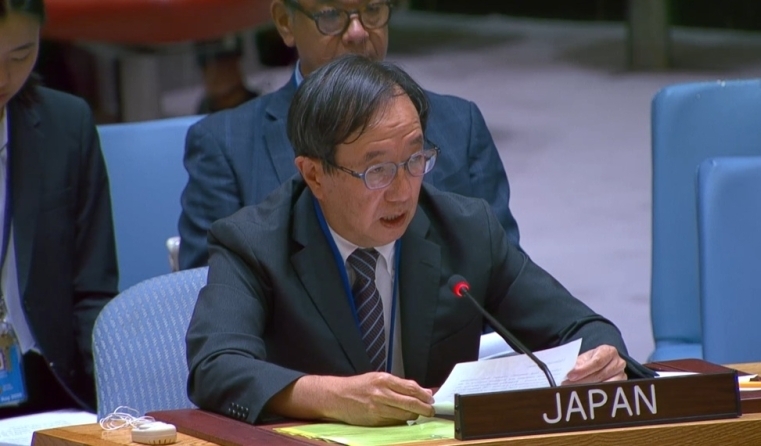
(As delivered)
Thank you, Madam President,
I thank Denmark for convening this important meeting.
Eight years after the adoption of Security Council resolution 2417, conflict continues to drive alarming levels of hunger and food insecurity.
Japan is deeply concerned by the Secretary-General’s finding that 147 million people across 19 countries and territories face acute conflict-induced food insecurity.
We are further concerned that escalating regional tensions are disrupting commodity flows through the Strait of Hormuz and the Black Sea, stalling food and fertilizer supplies, heightening food-crisis risks, and disproportionately affecting the most vulnerable countries.
The United Nations, including the Security Council, must respond to these humanitarian situations and food insecurity with urgency and solidarity. Japan calls on all parties to armed conflict to uphold their obligations under international law, including by facilitating rapid and unimpeded humanitarian access, and to implement Resolution 2417, including through the protection of objects indispensable to the production and distribution of food. We further urge the international community to strengthen early warning mechanisms and make full use of existing UN tools to prevent and address conflict-induced food insecurity.
Madam President,
Addressing food insecurity requires both immediate humanitarian assistance and long-term recovery of the agricultural system. Regarding immediate response, this year, Japan contributed 31.8 million USD through WFP to support emergency food assistance in Palestine, helping ensure the continued delivery of essential food supplies to families who have endured months of crisis.
Regarding mid to long term recovery efforts, Japan committed approximately 4.4 million USD through FAO and UNMAS to support the clearance of mine and unexploded ordnance to enable the safe return of farming families to northwest Syria. This assistance helps save lives while empowering affected communities to rebuild their livelihoods in dignity and self-reliance, laying the foundation for a more stable and hopeful future.
The food security situation in Africa also demands our serious attention. According to the latest Hunger Hotspots report, jointly published by FAO and WFP, 7 of the world's 13 hunger hotspots are in Africa, including Sudan, South Sudan and Somalia.
In response, Japan has contributed a total of 25.5 million USD this year to 26 African countries through WFP and FAO, including several identified as hunger hotspots, providing both emergency food assistance and mid to long term resilience-building support.
Madam President,
These responses are critical for coping with the crises, but lasting solutions unequivocally require tackling the root causes of conflict and hunger through the humanitarian, development and peace nexus. The human security approach, long advocated by Japan, provides an important framework for advancing this nexus on the ground.
In closing, Japan remains committed to supporting immediate humanitarian responses and long-term resilience-building efforts in cooperation with the international community to combat hunger and assist conflict-affected populations.
I thank you.