
Statement by H.E. Ambassador UMETSU Shigeru, Deputy Permanent Representative of Japan to the United Nations, at the General Discussion of the 2026 ECOSOC Humanitarian Affairs Segment
2026/6/19
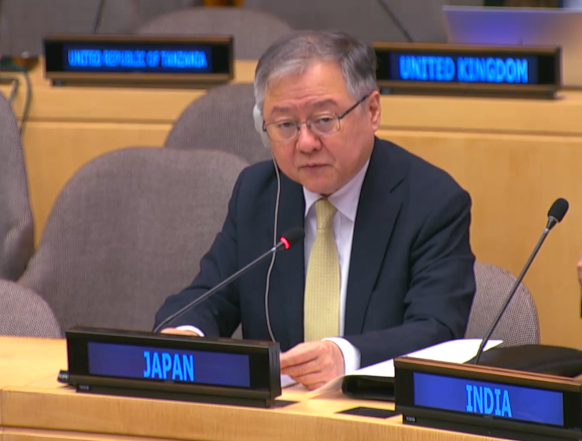
(As delivered)
Thank you, Mr. President.
First I would like to sincerely thank the humanitarian workers striving tirelessly to transform countless lives, despite facing resource constraints and changing contexts.
According to OCHA's Global Humanitarian Overview 2026, 239 million people are in need of humanitarian assistance and protection, amid armed conflicts, climate-related disasters, food insecurity and forced displacement. International humanitarian law and humanitarian principles are under severe strain, compounding widening gaps between needs and available resources. Against this alarming backdrop, Japan remains committed to providing humanitarian funding despite fiscal constraints and contributing to the targets set out in the GHO.
Mr. President,
UN80 and the Humanitarian Reset are more vital than ever, and we commend USG Fletcher's leadership. As the Humanitarian Reset advances, it is important to preserve donor flexibility, including for broadening the donor base. Japan intends to continue providing project-based funding, recognizing the complementarity of funding types, and looks forward to contributing to the GHO within the Reset framework. Japan also welcomes the New Humanitarian Compact as an important step and anticipates concrete and measurable outcomes from its implementation. Public-private partnerships can also play a role in finding creative solutions to close gaps and scale up capacities to deliver on the ground.
Mr. President,
A comprehensive HDP Nexus approach is urgently needed to strengthen resilience and prevent crises before they escalate, precisely aligned with the Humanitarian Reset's goal of improving efficiency and effectiveness. Humanitarian-development collaboration can reduce risks and vulnerabilities across the short, medium, and long-term. In fragile situations, Japan supports refugee self-reliance and provides seamless assistance ranging from humanitarian aid to poverty reduction, economic development, peacebuilding and conflict prevention.
Furthermore, as part of the international community’s efforts to advance human security—an approach that place individuals at the center—Japan has been a longstanding and major contributor to the United Nations Trust Fund for Human Security.
Mr. President,
The latest Secretary-General’s report noted more than 37,000 civilian deaths and more than 332 humanitarian workers killed globally in 2025. This troubling trend highlights the urgent need to reinforce respect for international law, including IHL, and to redouble our collective efforts to protect civilians, including humanitarian personnel. Japan is actively engaged in this area as a member of the Ministerial Group on the Declaration for the Protection of Humanitarian Personnel. Japan also joined the Global IHL Initiative in August 2025, contributing to discussions from the standpoint of promoting compliance with IHL.
Mr. President,
Japan remains committed to working with the international community to ensure no one in need is left behind, and stands ready to deepen partnerships for a more effective and humane global response.
Thank you.