
Statement by H.E. Ambassador UMETSU Shigeru, Deputy Permanent Representative of Japan to the United Nations, at the Plenary meeting: “Prevention of Armed Conflict” [item 31 (a)]: Note by the Secretary-General (A/80/650) [International, Impartial and Independent Mechanism to Assist in the Investigation and Prosecution of Persons Responsible for the Most Serious Crimes under International Law Committed in the Syrian Arab Republic since March 2011]
2026/4/15
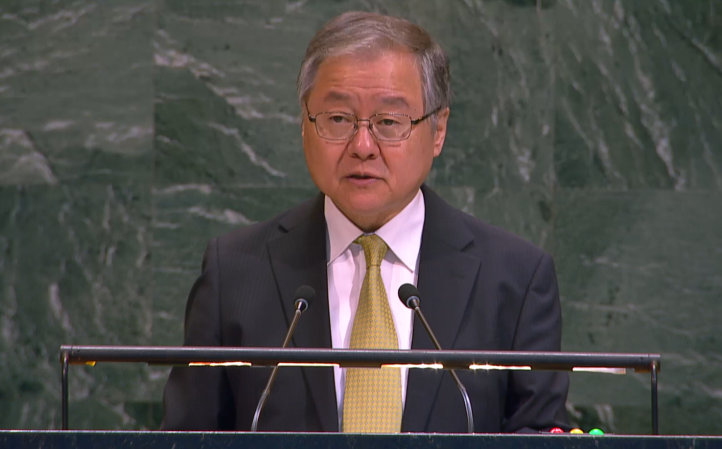
(As delivered)
Thank you, Mr. President.
First of all, I would like to extend my appreciation to Mr. Robert Petit for his briefing.
It has been one year and four months since the collapse of the Assad regime. The changes that have taken place during this period are noteworthy, and some progress has been made toward a peaceful and stable political transition in Syria.
As the situation in the Middle East has been tremendously shaken, the international community must unite in its support to ensure that the Syrian-owned and Syrian-led process moves forward steadily and contributes to regional stability.
For achieving a peaceful transition and comprehensive national reconciliation in the country, it is essential to hold accountable those responsible for core crimes committed during the prolonged conflict. A vast number of innocent civilians have fallen victim, and perpetrators must be punished.
Therefore, the role played by the IIIM has become all the more important. With that in mind, I would like to make three points.
First, we welcome the steady progress made by the Mechanism over the past year in collaboration with the Syrian Government. The fact that regular dialogue is taking place with relevant ministries and agencies demonstrates the Government’s commitment to transitional justice and its willingness to cooperate with the international community, including the United Nations, to achieve this goal. In particular, we commend the constructive efforts made through multiple exchanges of views in Geneva with relevant officials, including the Chair of the National Commission for Transitional Justice. We value positive engagements by Syrian authorities and expect them to strengthen such efforts.
At the same time, we note that the request regarding the establishment of the IIIM office in Damascus remains unresolved. While we understand that the Syrian Government is facing overwhelming tasks, we strongly expect the Government to accommodate this request promptly.
Second, we emphasize the importance of coordination with relevant UN mechanisms. It is crucial that relevant agencies contributing to accountability work in concert to achieve maximum productivity, particularly at a time when institutional reforms across the entire UN system are under deliberation. We welcome that cooperation between the Independent International Commission of Inquiry (COI) and the Independent Institution on Missing Persons (IIMP) continues including the conclusion of a memorandum between the IIIM and the IIMP last May.
Third, a victim-centered approach must be upheld. It is particularly noteworthy that the Mechanism is expanding its dialogue not only with members of the Syrian Government but also with representatives of civil society and organizations of victims and survivors. Any accountability process must prioritize the dignity of victims and embody their will.
In closing, Japan intends to work in coordination with the international community to support an inclusive, peaceful, and stable transition led by the Syrian Government and people.
I thank you.
First of all, I would like to extend my appreciation to Mr. Robert Petit for his briefing.
It has been one year and four months since the collapse of the Assad regime. The changes that have taken place during this period are noteworthy, and some progress has been made toward a peaceful and stable political transition in Syria.
As the situation in the Middle East has been tremendously shaken, the international community must unite in its support to ensure that the Syrian-owned and Syrian-led process moves forward steadily and contributes to regional stability.
For achieving a peaceful transition and comprehensive national reconciliation in the country, it is essential to hold accountable those responsible for core crimes committed during the prolonged conflict. A vast number of innocent civilians have fallen victim, and perpetrators must be punished.
Therefore, the role played by the IIIM has become all the more important. With that in mind, I would like to make three points.
First, we welcome the steady progress made by the Mechanism over the past year in collaboration with the Syrian Government. The fact that regular dialogue is taking place with relevant ministries and agencies demonstrates the Government’s commitment to transitional justice and its willingness to cooperate with the international community, including the United Nations, to achieve this goal. In particular, we commend the constructive efforts made through multiple exchanges of views in Geneva with relevant officials, including the Chair of the National Commission for Transitional Justice. We value positive engagements by Syrian authorities and expect them to strengthen such efforts.
At the same time, we note that the request regarding the establishment of the IIIM office in Damascus remains unresolved. While we understand that the Syrian Government is facing overwhelming tasks, we strongly expect the Government to accommodate this request promptly.
Second, we emphasize the importance of coordination with relevant UN mechanisms. It is crucial that relevant agencies contributing to accountability work in concert to achieve maximum productivity, particularly at a time when institutional reforms across the entire UN system are under deliberation. We welcome that cooperation between the Independent International Commission of Inquiry (COI) and the Independent Institution on Missing Persons (IIMP) continues including the conclusion of a memorandum between the IIIM and the IIMP last May.
Third, a victim-centered approach must be upheld. It is particularly noteworthy that the Mechanism is expanding its dialogue not only with members of the Syrian Government but also with representatives of civil society and organizations of victims and survivors. Any accountability process must prioritize the dignity of victims and embody their will.
In closing, Japan intends to work in coordination with the international community to support an inclusive, peaceful, and stable transition led by the Syrian Government and people.
I thank you.