
“Leveraging Partnerships to Finance Peace: Lessons Learned from the Ground”
2026/6/23
 |
 |
 |
 |
 |
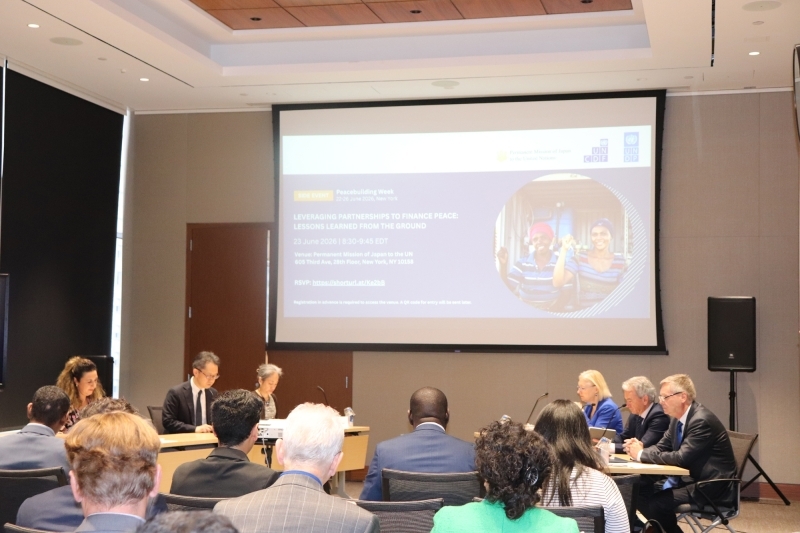
On 23 June 2026, an “Leveraging Partnerships to Finance Peace: Lessons Learned from the Ground” was held at the Permanent Mission of Japan to the United Nations, co-hosted by the United Nations Development Programme (UNDP) and the United Nations Capital Development Fund (UNCDF).
The event was held on the occasion of the Peacebuilding Week, with the aim of discussing how the United Nations, IFIs, and the private sector can mobilize and utilize financing for peace by leveraging their respective strengths and by translating peacebuilding needs into fragile and conflict-affected contexts into concrete and investable projects. Approximately 70 participants attended the event, including representatives from Permanent Missions to the United Nations, UN agencies, IFIs, and civil society.
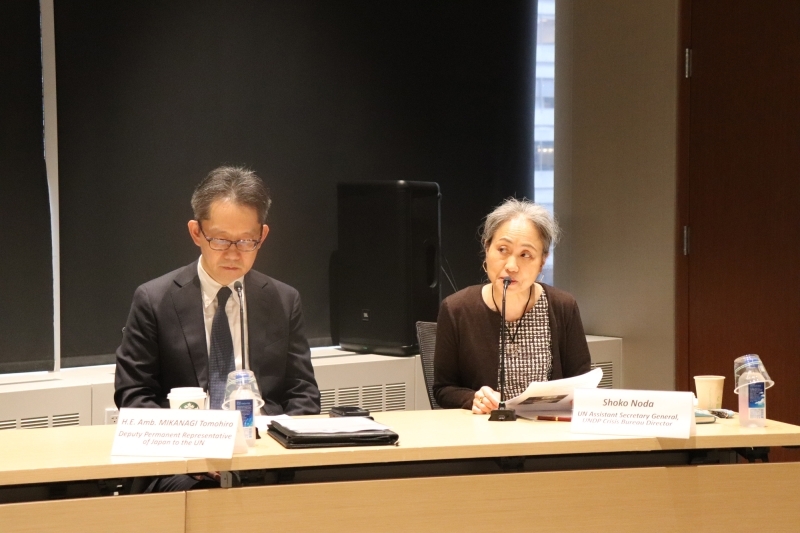
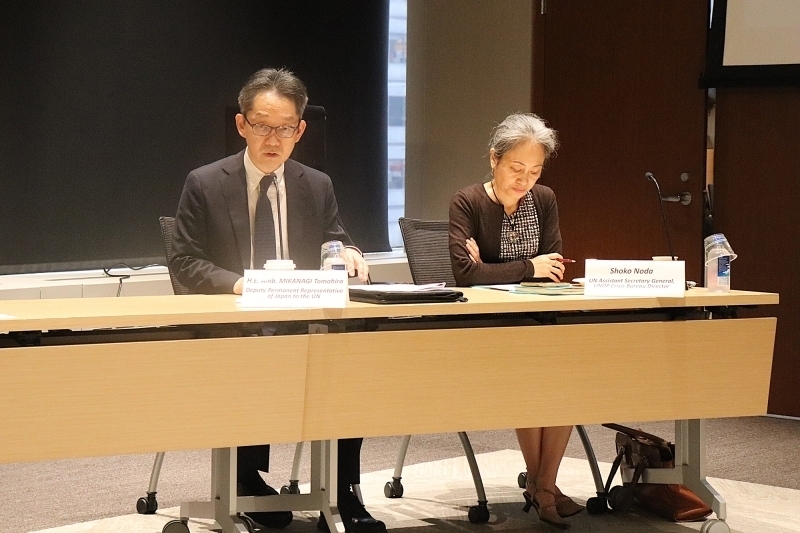
At the beginning of the event, H.E. Mr. Tomohiro Mikanagi, Deputy Permanent Representative of Japan to the United Nations, stated that, in fragile and conflict-affected contexts, financing for peace is not merely about mobilizing resources, but about connecting targeted peacebuilding support with broader development financing through effective partnerships, while taking into account the perspectives of human security and the humanitarian-development-peace (HDP) nexus. He also noted that Japan and UNDP share an emphasis on national ownership and partnership, as well as the view that peacebuilding support should lead to tangible results on the ground. In this regard, he emphasized the importance of deepening case-based exchanges on how peacebuilding needs on the ground can be translated into concrete projects that contribute to local economic recovery and the mobilization of development finance.
In addition, Ms. Shoko Noda, UNDP Assistant Administrator and Director of the Crisis Bureau, stated that, as protracted conflict, climate change, displacement, and migration are increasingly interconnected, peace is not only a political and security objective, but also a development outcome. She noted that youth employment, entrepreneurs’ access to markets and finance, and the participation of women and youth in decision-making are all important components of peace. She further emphasized the need for governments, the United Nations, IFIs, and the private sector to combine their respective strengths.
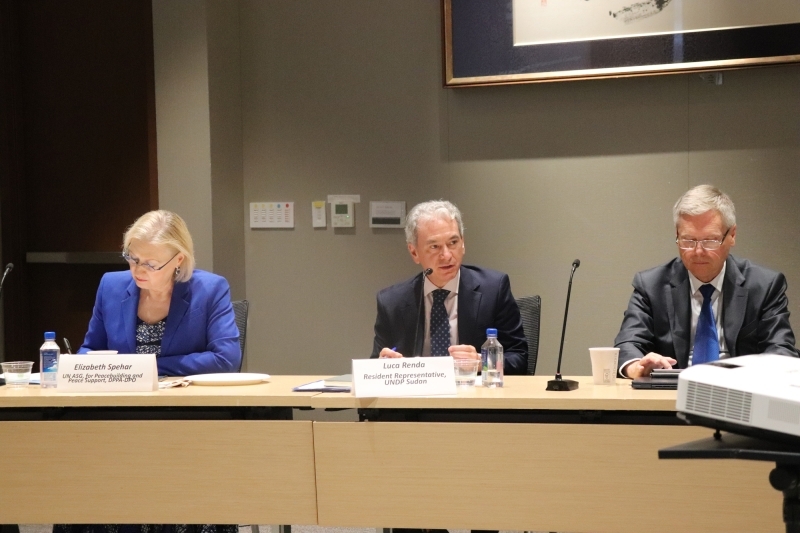
Following this, representatives from the World Bank Group, the African Development Bank, UNDP country offices in Mauritania, Palestine, and Sudan, as well as the private sector, made presentations on the need to translate peacebuilding needs on the ground into investable and scalable concrete projects through investment in prevention, job creation, support for micro, small and medium-sized enterprises (MSMEs), financial inclusion, institutional strengthening, and investment in civic infrastructure. Practical insights on financing for peace were shared through examples including the national prevention strategy in Mauritania, early recovery and market revitalization in Palestine, and the rebuilding of institutional and civic foundations in Sudan.
Furthermore, participants engaged in a lively exchange of views on issues such as the role of the private sector in fragile settings, support for entrepreneurship and business growth led by youth and women, and the place of social cohesion, trust-building, reconciliation, and inter-community dialogue in national prevention strategies.
In the closing remarks, Ms. Elizabeth Spehar, Assistant Secretary-General for Peacebuilding Support, stated that peace does not automatically emerge as a result of investment, and that conflict sensitivity, inclusion, and an understanding of local dynamics must be incorporated into development investment. She also emphasized that, in order to make financing for peace effective, it is essential to develop investable projects, support institutions, link such efforts with political engagement, ensure national ownership, and build broad partnerships.
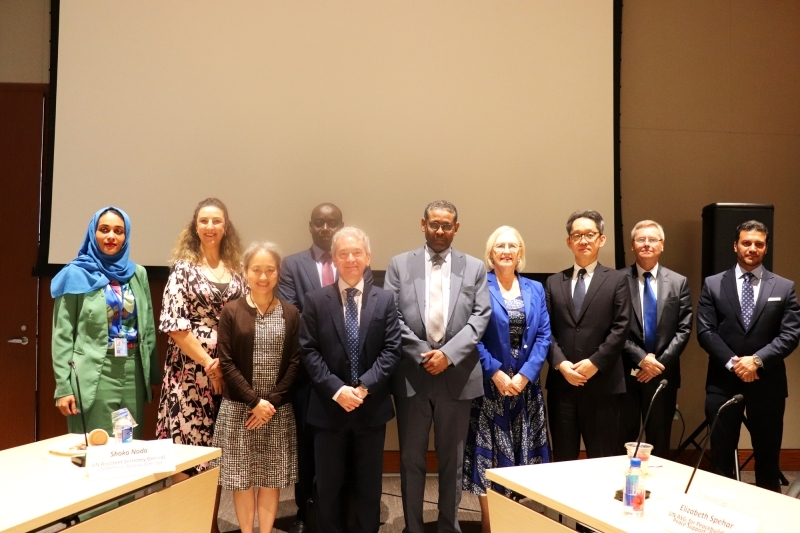
The event provided a meaningful opportunity to further concrete cooperation among the United Nations, IFIs, and the private sector in peacebuilding, and to connect financing for peace to tangible results for people, communities, and institutions on the ground. Japan intends to continue promoting efforts that contribute to sustaining peace, in cooperation with relevant countries, UN agencies, IFIs, the private sector, and other partners, while upholding the principles of human security and the HDP nexus.