
Statement by Professor MURAOKA Azusa, Advisor to the Government of Japan, at the Interactive Dialogue with the Independent Expert on protection against violence and discrimination based on sexual orientation and gender identity, Mr. Graeme REID
2026/10/16
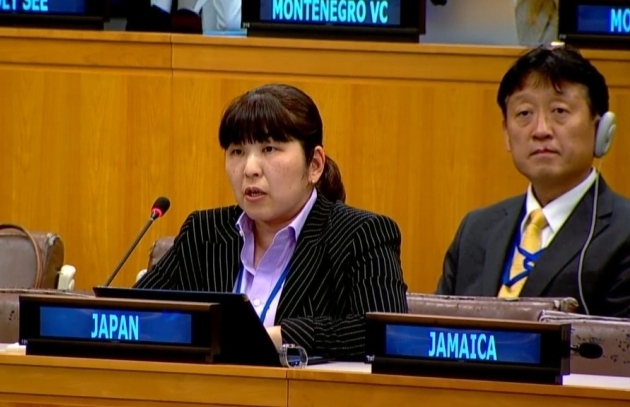
(As delivered)
Thank you, Mr. Chair.
At the outset, Japan would like to express its sincere appreciation to Mr. Reid for his insightful report, which sheds light on the significant challenges faced by LGBT persons in humanitarian settings, including discrimination, exclusion, and institutional barriers that hinder their access to essential services, such as shelter, food, healthcare, and protection.
Japan attaches great importance to ensuring protection against violence and discrimination based on sexual orientation and gender identity, including in humanitarian settings. As a founding member of the LGBTI Core Group, Japan remains firmly committed to supporting the mandate of the Independent Expert.
We welcome the report’s identification of promising practices in countries such as Mexico, Colombia, Brazil, Kenya, and Fiji, aimed at enhancing access to essential services, strengthening protection, and promoting community-based support for LGBTI persons in humanitarian and displacement settings.
In this regard, we would appreciate your views on which of these initiatives have proven particularly effective and could be replicated or scaled up, especially in resource-constrained settings, to ensure safe, equitable, and non-discriminatory access to humanitarian assistance.
I thank you.