
Statement by H.E. Ambassador MIKANAGI Tomohiro, Deputy Permanent Representative of Japan to the United Nations, at the General Debate of the 81st Session of the Second Committee
2026/10/6
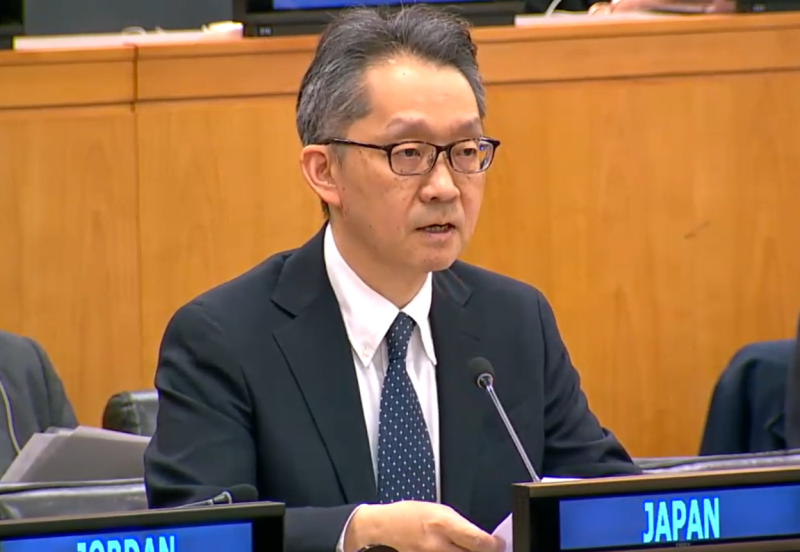
Madam Chair,
At the outset, I warmly congratulate Ambassador Suela Janina of Albania on assuming the Chair of the Second Committee, and welcome the newly appointed Bureau members.
I also express deep gratitude to Ambassador Lamin B. Dibba of The Gambia and the outgoing Bureau for their dedicated leadership.
The complex challenges we face require strong multilateral cooperation through this Committee. Amid tightening development finance, Japan remains committed to collaborating with international organizations to improve access to finance for developing countries. We actively promote private sector engagement, risk mitigation, job creation, and sustainable economic transformation. Notably, we support African nations with low credit ratings to reduce the cost of borrowing in capital markets, thereby preserving scarce fiscal resources for critical social investments that uplift lives.
Moreover, against this backdrop, the concept of human security – which adopts a cross-cutting and inter-agency approach through prevention, protection, and empowerment to uphold human dignity – has become increasingly useful and important. Japan will continue to promote human-centered approaches to global challenges. We are also intensifying capacity-building to support developing countries in adopting safe, secure, and trustworthy artificial intelligence.
Madame Chair,
Allow me to highlight three priority areas that Japan emphasizes in advancing sustainable development.
First, in the area of health, guided by human security, Japan has long championed universal health coverage (UHC). This year, we co-hosted the UHC Friends Group Ministerial Meeting during the UN High-Level Week. We emphasize respect for national ownership in strengthening UHC, as well as the critical need to mobilize domestic resources and build resilient, sustainable, and autonomous health systems. Through initiatives such as the UHC Knowledge Hub, established in partnership with WHO and World Bank, we support health financing and capacity-building in health and finance ministries.
Second, on climate change, Japan recognizes that sea level rise and intensifying disasters pose serious and urgent threats to vulnerable countries. Ahead of COP31, it is vital to advance the discussions on mitigation and sustain the Paris Agreement’s ambition cycle – encompassing Nationally Determined Contributions, Biennial Transparency Reports, and the Global Stocktake – to ensure that all actors remain committed to the Agreement’s goals.
Third, regarding disaster risk reduction, drawing on Japan’s extensive experience with disasters, we have taken a leading role in the implementation of the Sendai Framework. Next year, we will host the Asia-Pacific Ministerial Conference on Disaster Risk Reduction in Sendai alongside UNDRR.
Moreover, in December, at the UN Water Conference, Japan will co-chair the Interactive Dialogue on Water for Planet, addressing integrated management of water resources and water-related disasters, such as floods and droughts, as a comprehensive societal issue. Through these efforts, we seek to facilitate knowledge-sharing and enhance disaster resilience.
Madam Chair,
In conclusion, we emphasize the importance of adhering to the General Assembly resolution adopted this March on the mandate review, and the July resolution on revitalization of the work of the Second Committee.
We anticipate your strong and impartial leadership, to foster constructive dialogue among Member States and achieve meaningful outcomes. We are committed to actively taking part in this Committee’s discussions as we work together to realize the Sustainable Development Goals.
I thank you.