Statement by H.E. Ambassador MIKANAGI Tomohiro, Deputy Permanent Representative of Japan to the United Nations, at the United Nations Security Council Open Debate on “Natural Resources Governance: The Foundation of Peace, Security and Prosperity”
2026/7/22
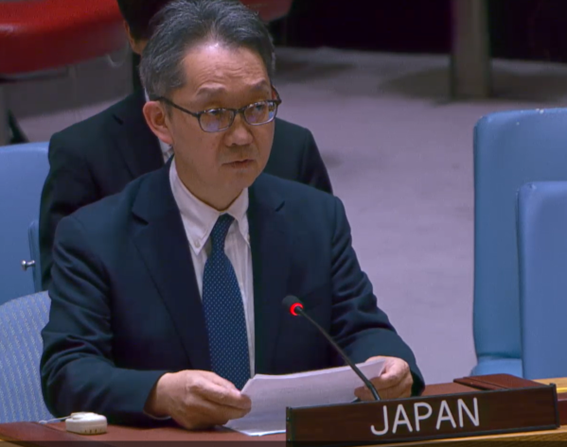
Thank you, Madame President.
I thank the Democratic Republic of the Congo for convening this important open debate.
When utilized wisely and peacefully, mineral resources can be a driving force for development. In practice, however, they are often used to fuel armed conflicts, and disputes over resource interests can trigger conflicts. Sound mineral resource governance is therefore indispensable for both conflict prevention and sustainable development.
As a part of the pursuit of sound governance, Japan has participated in the Extractive Industries Transparency Initiative (EITI) since 2018, and, through JICA, has been supporting Papua New Guinea to enhance transparency in its mining sector by dispatching experts and organizing training programs.
Moreover, as part of Japan’s contribution to the United Nations Office on Drugs and Crime (UNODC), Japan will support the organization of a high-level roundtable this year in the Democratic Republic of Congo, bringing together senior representatives of regulatory authorities and law enforcement agencies to address crime and corruption risks associated with the mineral trade. This initiative will strengthen international and regional cooperation, enhance information sharing, and deliver training aimed at enabling more effective and timely responses to illicit cross-border transactions.
To avoid excessive reliance on mineral resources, balanced and sustainable development must be pursued. As an example, Japan also supports infrastructure and industrial development in the Nacala Corridor, encompassing Mozambique, Malawi, and Zambia, a region rich in mineral resources and arable land, with a view to fostering sustainable development.
Critical minerals also face the risk of supply disruption due to export restrictions, raising concern across the international community. We must therefore address this issue from the perspective of global supply chain resilience, as well.
To enhance global supply chain resilience, Japan has led the launch of the Resilient and Inclusive Supply-chain Enhancement (RISE) Partnership, which offers technical assistance and capacity-building to help developing countries play a greater role across critical mineral supply chains, including by improving the investment environment.
In conclusion, Japan remains firmly committed to advancing conflict prevention, sustainable development, and global supply chain resilience in close cooperation with all partners.
I thank you.