
Statement by H.E. Ambassador MIKANAGI Tomohiro, Deputy Permanent Representative of Japan to the United Nations, at the Informal Meeting of the General Assembly on the Intergovernmental Negotiations on Security Council Reform on behalf of the G4
2026/4/14
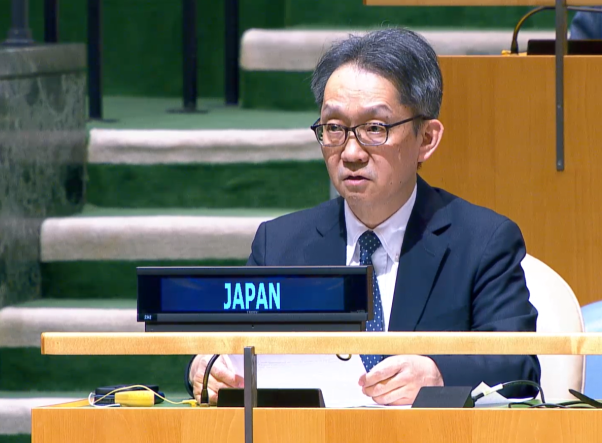
(As delivered)
Thank you, Co-Chairs.
Japan fully aligns with Brazil’s statement on behalf of the G4. I will make additional remarks in my national capacity.
As set out in the Pact for the Future, it is imperative to "intensify efforts to reach an agreement on the future of the veto, including discussions on limiting its scope and use". From this perspective, Japan reaffirms that the French-Mexican initiative and the ACT Group's Code of Conduct are valuable efforts as immediate measures that do not require amending the UN Charter.
These initiatives are not, however, supported by all permanent members of the Council. Japan therefore continues to urge all permanent members who have not done so to commit to voluntary restraint on the use of the veto without delay and to implement this commitment accordingly.
Japan also reiterates the need to fully implement and adhere to all provisions of the Charter as they relate to the decision-making process in the Council, including Article 27 (3), as stated in the Pact for the Future.
Co-Chairs,
Despite all these initiatives, a more fundamental issue is the need for a solution to the existing imbalance within the Council in terms of the veto. Japan, as a G4 member, takes the position that the new permanent members should as a principle have the same responsibilities and obligations as current permanent members. In this regard, Japan reiterates that the G4 shares the same position as the African Group in that the veto should be made available to the new permanent members so long as it exists.
On this basis, the G4 takes the position that the new permanent members shall not exercise the veto until a decision on the matter has been taken during a review, to be held 15 years after the coming into force of the reform. This is to offer flexibility, while maintaining the principle, in order to resolve issues surrounding the veto from a practical perspective and allow for constructive negotiation.
Co-Chairs,
As emphasized in the G4 statement, expansion in both the permanent and non-permanent categories is essential to make the Council truly more democratic and accountable. This could also increase the chances of exploring newer approaches to the veto seriously.
On the occasion of this 80th session, we must make concrete progress on developing a consolidated model. Japan remains committed to contributing constructively to this end.
I thank you.