Statement by Mr. KAWAHARA Kazutaka, Minister in charge of Social Affairs, Permanent Mission of Japan to the United Nations, in Exercise of the Right of Reply at the General Debate of the 81st Session of the Third Committee of the United Nations General Assembly
2026/10/5
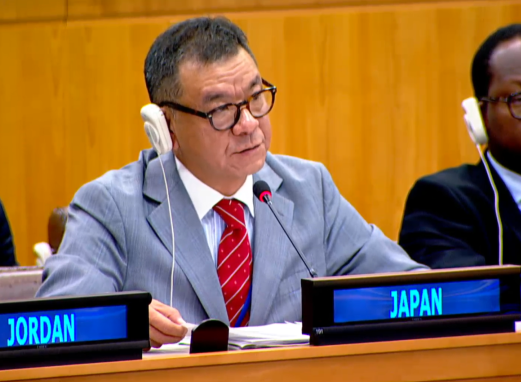
In response to the exercise of right of reply by the Chinese delegation at the meeting, Mr. Kawahara delivered the following statement.
Thank you, Madam Chair.
It is unfortunate that I am compelled to exercise my right of reply in response to the statement by China. The claims that China mentioned regarding Japan are based on factual errors and are groundless.
Okinawa Prefecture has its own unique and rich culture and tradition just like other regions in Japan. The Government of Japan, however, is not of the view that people born in Okinawa are “Indigenous people” or as being part of an “Indigenous ethnic group”, nor is such a view widely recognized in Japan. In fact, voices of protest have been raised in multiple municipal assemblies in Okinawa stating that it is incorrect to recognize people born in Okinawa as “Indigenous people” or as belonging to an “Indigenous ethnic group.”
As a matter of course, Japanese people living in, or born in, Okinawa prefecture are Japanese nationals, on an equal basis with all other citizens, and their rights as Japanese nationals are guaranteed fully and without distinction.
Japan has concluded various human rights treaties, sincerely adheres to them and strives to protect and promote human rights. Japan consistently reviews its various domestic institutions and measures.
Thank you, Madam Chair.
Second Intervention
Thank you, Madam Chair.
It is unfortunate that I am compelled to exercise my second right of reply in response to the statement by China.
Japan has concluded various human rights treaties, sincerely adheres to them and strives to protect and promote human rights. Japan consistently reviews its various domestic institutions and measures.
Regarding Japan's national security policy, the defense capabilities Japan maintains are kept to the minimum necessary to ensure Japan's security in the face of the most severe and complex security environment since the end of World War II. Under the Constitution, Japan adheres to the basic policy of exclusively maintaining national defense-oriented policy, without becoming a military power that poses a threat to other countries. Also, Japan firmly maintains the Three Non-Nuclear Principles. Japan will never change the course it has taken as a peace-loving nation.
Thank you.