
Statement by Mr. KAWAHARA Kazutaka, Minister in charge of Social Affairs, Permanent Mission of Japan to the United Nations, at the General Debate of the 81st Session of the Third Committee of the United Nations General Assembly
2026/10/2
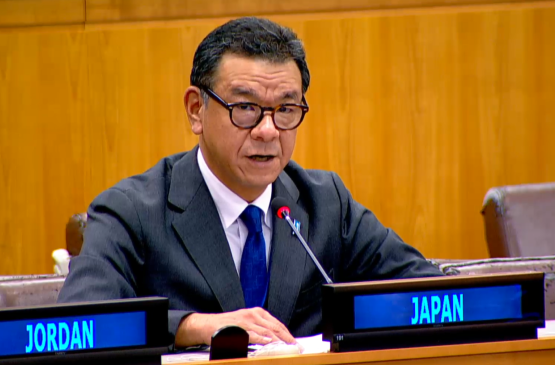
Mr. Chair, Distinguished Delegates,
In the face of today’s complex global challenges, it is imperative to reaffirm and uphold universal values, such as human rights and fundamental freedoms. While approaches may differ, the promotion and protection of human rights is a fundamental obligation of all nations. Japan is steadfastly committed to the promotion and protection of human rights and will continue to work in close cooperation with Member States, the UN system, and civil society.
In this regard, Japan remains deeply concerned about the serious human rights and humanitarian situations continuing in various parts of the world.
(Human Rights Situations)
We continue to urge the DPRK to address the longstanding violations documented by the United Nations, including the issue of abductions of Japanese citizens, which is a matter of grave concern not only for Japan, but for the international community. The issue of abductions by North Korea relates to the sanctity of human life and must be resolved immediately, as the abductees and their families are aging. Japan is committed to working closely alongside the international community in addressing the human rights situation in the DPRK, including the abductions issue.
Japan remains seriously concerned about the human rights situation in China, particularly the recent trend of tightening restrictions on human rights defenders, intellectuals, and other individuals. Freedom, respect for fundamental human rights, and the rule of law must be ensured in China, including in Hong Kong, Xinjiang, and Tibet. We strongly urge China to take further constructive and concrete actions, including enhancing transparency.
With regard to Russia’s aggression against Ukraine, we are seriously concerned about reports indicating that civilian casualties are on the rise. Japan reiterates its call on the Russian Federation to fully comply with all of its obligations under international humanitarian law and international human rights law. We also call upon Russia to immediately return all abducted children and reunite them with their loved ones.
Japan remains deeply concerned about the worsening situation in the Middle East, including the ongoing settlement activities and the rise in settler violence against Palestinian civilians in the West Bank, as well as the humanitarian situation in Gaza. All parties to the conflict must fully uphold their obligations under international humanitarian law and international human rights law and ensure the protection of civilians. Japan will continue to contribute to international efforts aimed at improving the humanitarian situation and advancing peace and stability in the Middle East.
With regard to Syria, we welcome the progress achieved thus far, including steps taken toward the development of a transitional justice law, while emphasizing the urgent need to further advance accountability and safeguard the rights of detainees.
With regard to Afghanistan, we are particularly concerned by the institutionalized discrimination against women and girls. Japan reiterates its call on the Taliban to uphold Afghanistan’s international human rights obligations and lift the restrictions they have imposed on women and girls. Japan also calls on the Taliban to ensure that women and girls can enjoy their human rights fully and equally. To this end, Japan will leverage its presence in Kabul to engage directly with the Taliban, while coordinating with the international community.
Regarding Myanmar, Japan remains deeply concerned about the continued deterioration of humanitarian situation and human rights, including the grave situation of the Rohingya and other minorities. We are deeply troubled by the reports of deliberate aerial attacks against civilians, arbitrary detention, torture, and sexual violence committed by the Myanmar military. Japan reiterates its call for an immediate cessation of violence and tangible progress, including the release of all those detained and sincere dialogue among the parties concerned.
Japan is also deeply concerned by the reports of severe violations of international humanitarian law and international human rights law in Sudan across the Kordofan and Darfur regions, as well as Blue Nile. Civilians and civilian infrastructure have been impacted with the most vulnerable individuals, including women and children, disproportionately affected. Japan calls on all parties to guarantee safe voluntary passage and to facilitate rapid and unimpeded humanitarian access throughout the country.
(Rights of the Child)
Grave violations against children under conflict continue to be reported and documented in disturbingly high numbers. Japan is steadfast in its commitment to the Children and Armed Conflict agenda and strongly advocates for enhanced accountability mechanisms and the protection of education under international law.
Japan is also dedicated to advancing the rights and well-being of children through implementing the CRC and collaborating with global partners, including the Special Representative of the Secretary-General on Violence against Children. Japan will continue to engage with the SRSG’s office as a Pathfinding nation of the Global Alliance.
(Women, Peace and Security)
Japan places the utmost priority on advancing gender equality and promoting and protecting the human rights of women and girls.
We therefore remain committed to supporting the effective implementation of the Convention on the Elimination of All Forms of Discrimination against Women (CEDAW) and ensuring accountability for perpetrators of gender-based violence.
Conflict-related sexual violence continues to receive insufficient attention and disproportionately affect women and girls. Japan remains committed to international efforts to support survivors, advance their empowerment, and ensure access to justice.
Furthermore, Japan remains firmly dedicated to advancing the Women, Peace and Security agenda. To further increase awareness of the WPS agenda and the women’s meaningful participation in decision-making levels across all fields, the engagement and development of young people who will lead the future are urgent tasks. From this perspective, Japan started the Next Generation Network Program for Gender Equality last year to foster young people who will lead the gender field including the WPS agenda.
(Rights of Persons with Disabilities)
This year marks the twentieth anniversary of the Convention on the Rights of Persons with Disabilities, providing an important opportunity to reflect on progress made. Japan welcomes the contribution of Mr. TAMON Hiroshi as a member of the Committee on the Rights of Persons with Disabilities, and requests the Secretary-General to continue guaranteeing necessary support and access to information for the Committee members in line with the Convention and paragraph 42 of last year's relevant GA resolution.
Japan also continues to advance the rights of persons with disabilities domestically, including through recent legal reforms to enhance support for persons requiring assistance and to strengthen municipal consultation services.
(Cyber Crime, Terrorism)
International cooperation is essential to address transnational organized crime, including fraud, trafficking in persons, cybercrime and drug trafficking, as well as terrorism and violent extremism. Japan continues to promote capacity-building that upholds human rights and the rule of law, while advancing rehabilitation and reintegration to prevent reoffending.
Japan also attaches particular importance to global efforts to address scam centers in Southeast Asia, as they pose a threat to regional and international peace and security. In this regard, Japan, together with the United States and the United Kingdom, facilitated a resolution on strengthening crime prevention and criminal justice responses to fraud, adopted by the CCPCJ last June.
(Business and Human Rights)
Aiming at more effectively promoting respect for human rights in the context of business activities, Japan revised its National Action Plan (NAP) on Business and Human Rights last December, which was first launched in 2020. Through the revised NAP, Japan is advancing efforts to promote responsible business conduct across society as a whole, cooperating with various stakeholders including industry associations.
(Conclusion)
Mr. Chair,
Guided by the principles of dialogue and cooperation, and as a candidate for a second consecutive term on Human Rights Council (HRC), Japan will continue to actively engage with the international community to promote and protect human rights, including through the Third Committee while contributing to its effective functioning and enhancing synergy between New York and Geneva. The Bureau can count on Japan’s full support as we collectively address human rights issues to leave no one behind.
Thank you.
In response to the exercise of right of reply by the North Korean delegation at the meeting, Mr. Kawahara delivered the following statement.
Thank you, Madam Chair.
It is unfortunate that I am compelled to exercise my right of reply in response to the statement by North Korea.
The claims that North Korea mentioned regarding Japan are based on factual errors and are groundless.
Regarding issues relating to history, I must make it clear: all nations must be humble about their history and Japan has squarely faced its history.
As Former Prime Minister Shinzo Abe clearly stated in his statement on 14 August 2015 that “Japan has repeatedly expressed the feelings of deep remorse and heartfelt apology for its actions during the war” and that “such position articulated by previous cabinets will remain unshakable into the future.” The current administration has upheld in its entirety the positions of the previous Cabinets on history, including their Prime Ministers’ statements, and will continue to do so.
Since the end of World War II, Japan has consistently followed the path of a peace-loving nation and made innumerable contributions to the peace and prosperity of the world. Having served as a non-permanent member of the UN Security Council for the 12th time until the end of 2024, Japan will continue such contributions as a responsible member state of the United Nations.
I will briefly touch upon Japan’s position on the abductions issue in response to the statement made by the representative of the DPRK.
Japan’s policy on North Korea is to seek to normalize its relationship with North Korea, in accordance with the Japan-DPRK Pyongyang Declaration, through comprehensively resolving the outstanding issues of concern including the abductions issue, as well as settlement of the unfortunate past.
Among other issues, the abductions issue is a humanitarian and time-sensitive issue with no time to spare. The abductees and their family members are now well advanced in age. There is no time to be wasted. The abductions issue must be resolved immediately. Thank you.
Second Intervention
Thank you, Madam Chair.
It is unfortunate that I am compelled to exercise my right of reply in response to the statement by North Korea a second time. I will not repeat here what I said.
Japan has regarded the facts of history with humility and sincerely addressed various issues for over 80 years since the end of World War II. Having served as a non-permanent member of the UN Security Council 12 times over the last 70 years since Japan joined the UN, Japan has actively contributed to international peace and security.
Thank you, Madam Chair.