
Statement by Ms. FURUKAWA Yuri, Third Secretary, Economic Section, Permanent Mission of Japan to the United Nations, at the Second Informal Consultation on the Intergovernmental Process on Beyond GDP
2026/6/29
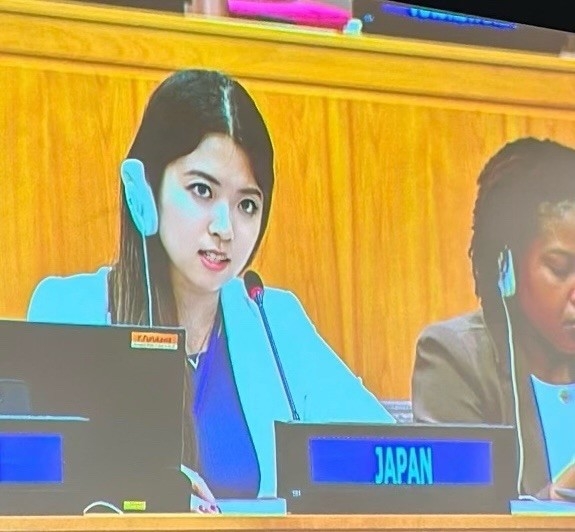
Thank you, Facilitator.
At the outset, Japan would like to thank Spain, in its role as facilitator, and the High-Level Expert Group for last week’s substantive Q&A session with the Member States. The exchange deepened our understanding of the report, and we look forward to receiving the written responses in due course.
Japan supports the core idea of complementing GDP with a broader sense of well-being, equity, inclusion, sustainability, and resilience. This is consistent with Japan’s long-standing ODA policy, which is guided by the principle of human security. From this perspective, we hope this process can help Member States to clarify a shared vision of well-being, which is the ultimate purpose of development.
In Japan’s view, flexibility is an important starting point for this process. Any Beyond GDP framework should be able to reflect each country’s policy priorities, statistical system, data availability, and national circumstances. It should therefore be applied in a flexible and voluntary manner, rather than as a one-size-fits-all set of indicators.
At the same time, the timeline should be carefully designed. Connecting this discussion to the 2027 SDG Summit and the broader Beyond 2030 agenda is important, but reaching an early conclusion should not become an objective in itself, particularly where methodologies and measurability remain unclear.
In this regard, Japan sees merit in distinguishing between political and technical discussions. In the intergovernmental process, Member States should focus on exploring a common understanding of the importance of having Beyond GDP framework. Detailed technical questions, including calculation methods, data sources, comparability, and links with national statistical systems, should be addressed through expert processes, including the UN Statistical Commission.
With regard to the outcome, Japan believes it should be practical and forward-looking. It should recognize the need to complement GDP while reaffirming its continued importance; call for further technical work on non-SDG and frontier indicators; and affirm flexible and voluntary application, starting from existing data and expanding gradually in line with each countries’ statistical capacity, policy context, and priorities.
This gradual approach is important. Some proposed indicators may be quite difficult for a number of Member States to apply domestically. This underscores the need for an outcome that remains practical and leaves sufficient space for further technical work.
Japan remains committed to contributing constructively to this process.
I thank you.